Louvre guide
First-timer's guide to visiting the Louvre
How to plan a Louvre visit that doesn't end in exhaustion: entrances, timing, how long you need, and a realistic highlights route.
Last updated: October 19, 2026
The one rule: don't try to see it all
The Louvre displays over 35,000 works across 8 departments and 400+ rooms. Nobody "does" the Louvre in a day, and trying is how museum fatigue happens. Pick a plan below and commit to it.
First visit and want a guide? A well-reviewed small-group tour is a solid starting point for comparing options. It covers the masterpieces without the six-hour death march:
Partner link, we may earn a commission at no extra cost to you.
Check availability on ViatorShort on time? This 60-second video runs through the ten tips that matter most on a first visit:
Watch: 10 Louvre Tips for First-Time Visitors (60-second Short)
Pick your visit length
- 2–3 hours (highlights): Mona Lisa (Denon wing), Winged Victory of Samothrace, Venus de Milo, plus one gallery that catches your eye.
- Half day (4–5 hours): the highlights plus a proper wander through two or three departments, Egyptian antiquities and the French paintings are good candidates.
- Full day: only if you genuinely love museums. Even then, take a proper lunch break outside the galleries.
Timing: when to go
- Best: Wednesday or Friday evening openings (until 9 PM), dramatically fewer visitors than midday.
- Second best: 9:00 AM sharp at opening, heading straight to the Mona Lisa before the tour groups arrive.
- Avoid: 10:00 AM–1:00 PM, the peak window every single day. February, March, October, and November are the quietest months overall.
Entrances and arrival
- Pyramid (Cour Napoléon): the main entrance. Iconic photo, longest security line.
- Carrousel du Louvre (99 Rue de Rivoli): underground entrance through the mall, often the fastest way in, and it drops you right into the museum complex.
- Porte des Lions: a smaller side entrance that opens at peak times.
Whichever you use, arrive 20–30 minutes before your timed slot for bag checks and security. Large bags aren't practical, travel light.
A realistic highlights route
- Enter via the Carrousel du Louvre and head to the Denon wing first, that's where the Mona Lisa is. Go early; the crowd around her only grows.
- From Denon, see the Winged Victory of Samothrace at the top of the Daru staircase, it's on the way and genuinely breathtaking.
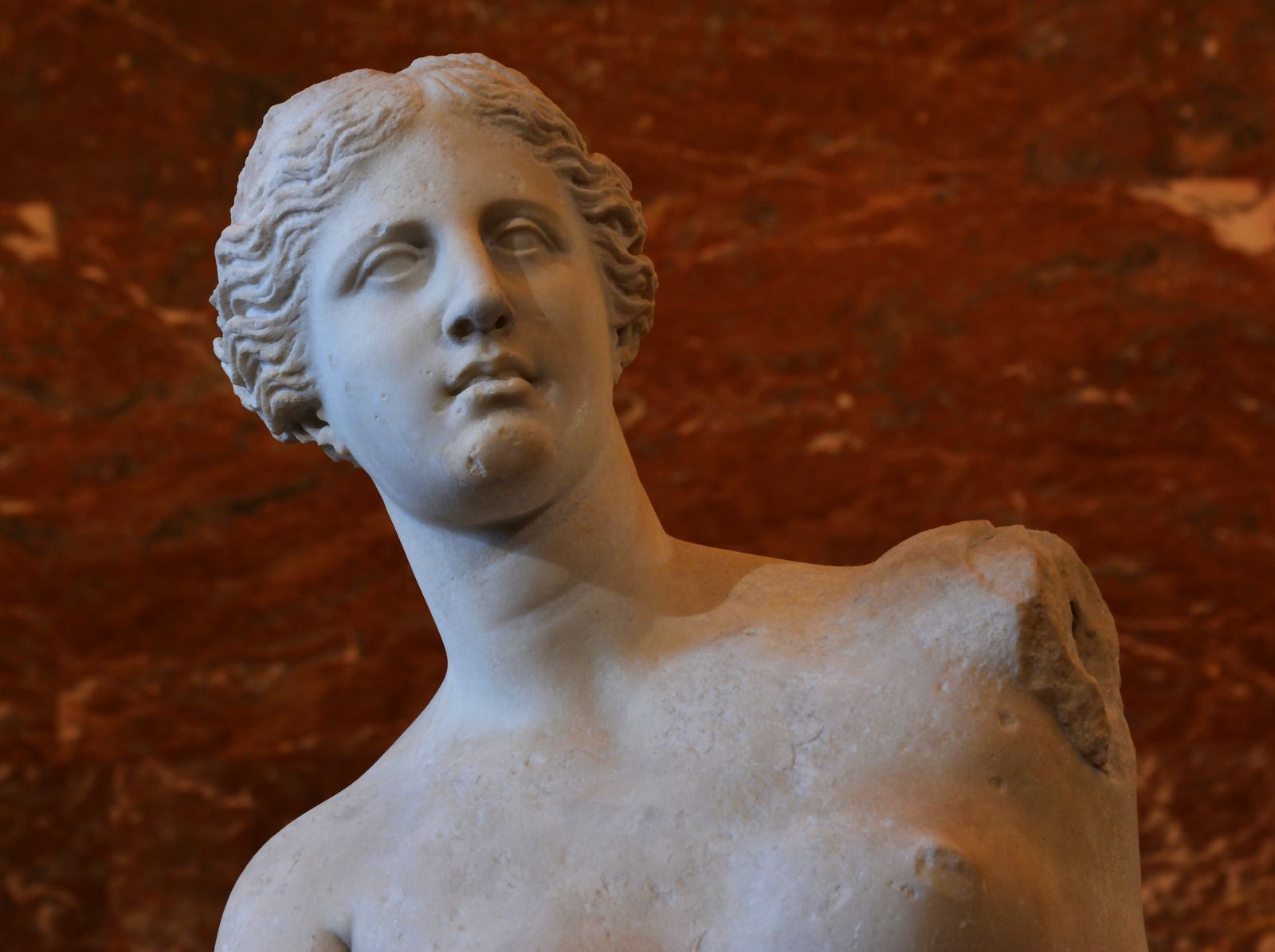
- Drop to the ground floor for the Venus de Milo and the Greek antiquities.
- Pick one more department that interests you, Egyptian antiquities are a favorite, and then stop. Leave wanting more, not limping.
The Mona Lisa route, step by step
The Mona Lisa hangs in the Salle des États (Room 711), on the first floor of the Denon wing, and the route there matters as much as the timing. Here's the way that works:
- Enter via the Pyramid. The Pyramid drops you into the Napoleon Hall, and the Denon stairs are directly ahead, it's the most straightforward start to this route.
- Up the Denon stairs, through the Daru gallery. This is where the Winged Victory of Samothrace stands at the top of the staircase, she commands the landing, so you see her on the way up. It's genuinely one of the great moments in any museum, and seeing her before the Mona Lisa crowds form is the right order.
- Continue into the Denon first-floor Italian paintings, the gallery level above the Daru stairs leads toward the Salle des États.
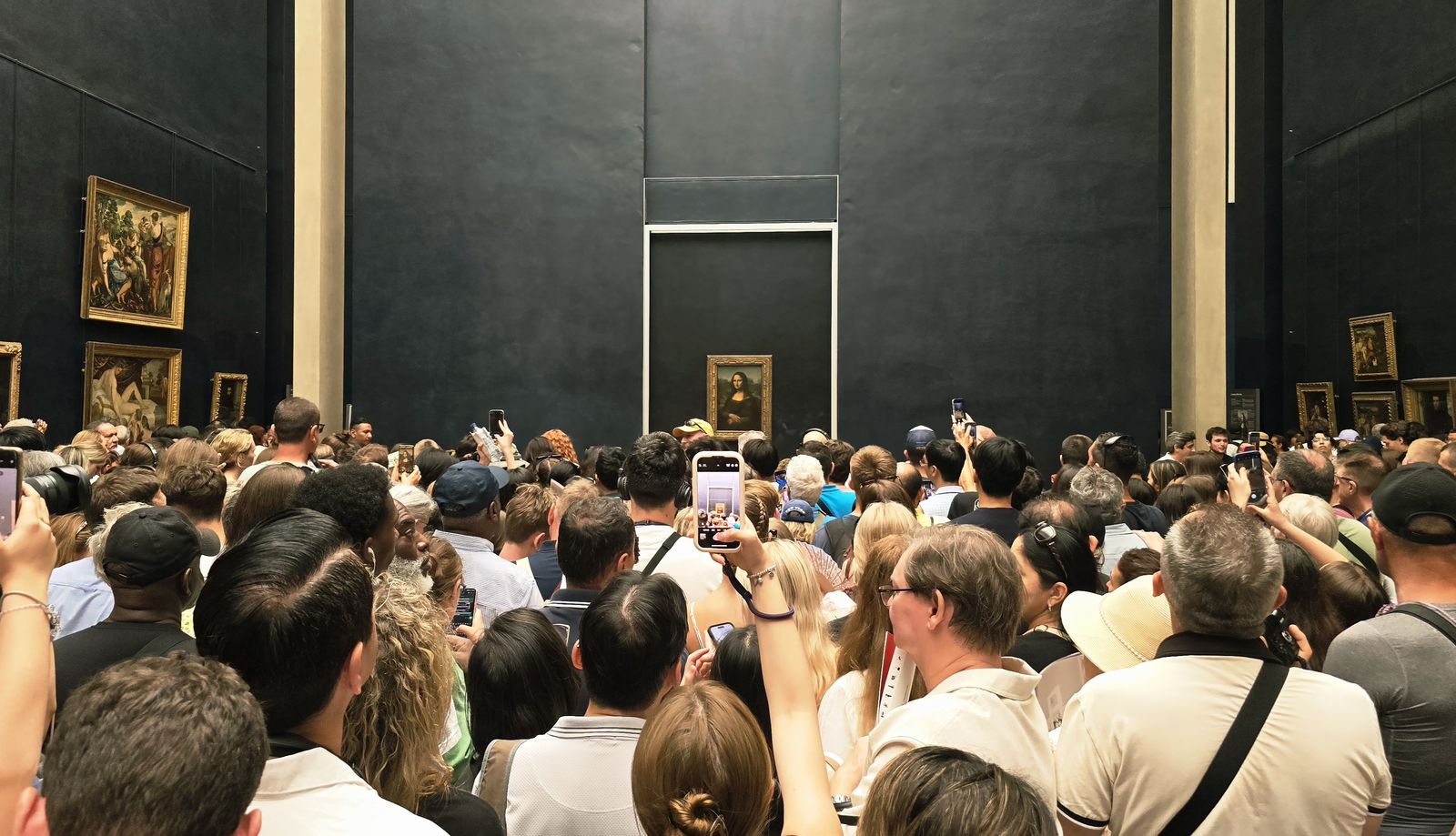
- The Mona Lisa room. She's in the Salle des États, hung on the far wall facing Veronese's Wedding at Cana. Expect a crowd: viewing is from behind a barrier, and you'll likely get a few minutes of slow shuffling. The painting is smaller than you expect, about 77 × 53 cm. See it, smile, and move on rather than waiting for a clear shot that isn't coming.
- Then Venus de Milo as the natural next stop. Head down to the Sully wing's ground floor for the Greek antiquities, the Venus is the anchor of the collection there, and the descent from Denon's Italian paintings through Sully's Greek rooms is one of the smoothest transitions in the building.
Practical tips
- Book your timed ticket in advance, see our Louvre tickets 2026 guide for prices and hours.
- The Mona Lisa is smaller than you expect and more crowded than you imagine. See it, smile, move on.
- Eat before or after, not during. A proper break outside the galleries resets your brain.
- Wednesday/Friday evenings are the single best upgrade to a Louvre visit, same art, a fraction of the crowd.
Hours and prices referenced here are covered in detail in our Louvre tickets 2026 guide. Verify current details on louvre.fr before your visit.
Frequently asked questions
How long do I need at the Louvre?
2–3 hours covers the highlights (Mona Lisa, Winged Victory, Venus de Milo). Half a day lets you explore two or three departments properly. Seeing everything in one visit isn't realistic, the museum displays over 35,000 works.
What's the best time to visit the Louvre?
Wednesday or Friday evenings (open until 9 PM) are the quietest. Otherwise, arrive right at 9 AM opening. The 10 AM–1 PM window is peak crowd time every day.
Which entrance is fastest?
The Pyramid is the main entrance and usually the longest line. The Carrousel du Louvre entrance (99 Rue de Rivoli, via the underground mall) is often faster. Use whichever entrance your ticket names.
Related guides
Paris Marathon 2027: lottery, route & spectator tips for the 50th edition
The 50th Paris Marathon runs April 4, 2027. Lottery results, registration, the route, and how to watch.
Updated October 2, 2026
Where to stay near the Louvre: neighborhoods, not hotels
The 1st is closest, but anywhere near metro lines 1 or 7 puts the Louvre 15 minutes away.
Updated September 25, 2026
Note: LouvreInsider is an independent travel information site and is not affiliated with the Musée du Louvre or any French government body. Always verify prices, hours, and entry rules on the official louvre.fr before your visit.